EntertainmentTourist Attractions
Casa Batlló
Pg. de Gràcia, 43, L'Eixample, 08007 Barcelona
Last Update: Feb 28, 2026
Also classified as
EntertainmentGuías y Tours
EntertainmentMiradores
EntertainmentInstagrameable
LifestyleSpots de Fotos
Description
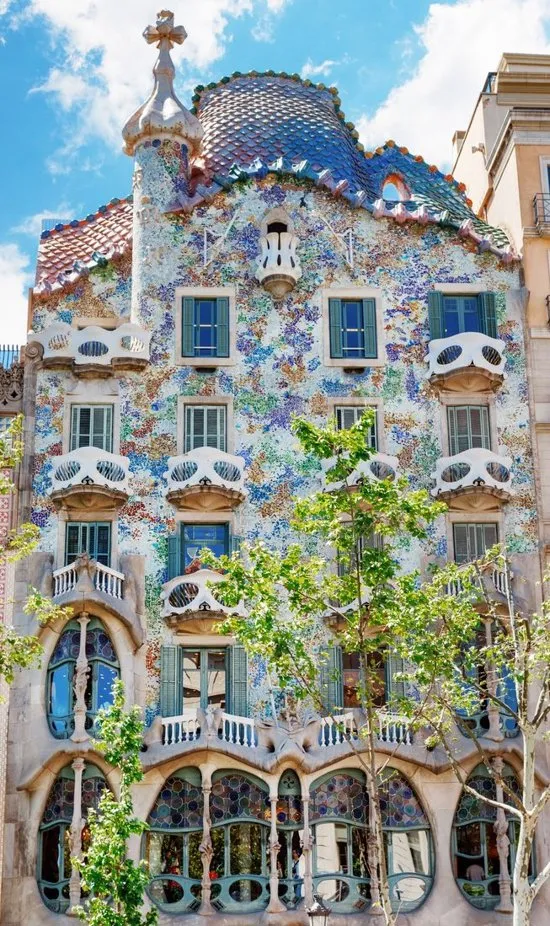
It is a masterpiece by Antoni Gaudí and an icon of modernism in Barcelona. Known locally as the "Casa dels ossos" for its visceral and skeletal quality, this tourist attraction is part of the "Illa de la Discòrdia", a block of buildings that exhibits works by various modernist architects.
Originally built in 1877 by Emilio Sala Cortés, Gaudí remodeled it between 1904 and 1906 on behalf of Josep Batlló, a textile industrialist.Gaudí completely transformed the façade, redistributed the interior walls and enlarged the light well to maximise natural lighting. The use of *trencadís*, a mosaic of broken ceramic tiles, adorns much of the façade, creating a vibrant play of colours.
The legend of Sant Jordi and the dragon is intertwined in the design, with the roof representing the back of the dragon and the four-armed cross symbolizing the sword of Sant Jordi.The stone columns on the façade evoke bones, while the undulating balconies are reminiscent of sea waves. Inside, curved, organic shapes dominate walls, ceilings, and furniture.
The interior of Casa Batlló is equally impressive, with unique details such as stained glass windows, tiles and doors marked with modernist letters. The light well, lined with tiles in gradient blue tones, distributes light evenly.The attic, with its catenary arches, evokes the ribs of an animal. The noble floor, which was the residence of the Batlló family, stands out for its large window overlooking Passeig de Gràcia and its mushroom-shaped fireplace.
Since the 1990s, Casa Batlló has belonged to the Bernat family, who opened it to the public in 1995. In 2005, it was declared a World Heritage Site by UNESCO.
Schedules
Daily from 9:00 am to 10:00pm.
Price Range
15 euros - 59 euros
Tips
ExclusiveTo see this tip, Log In to Seetymap or Sign Up if you don't have an account.
POSTS BY OTHER CREATORS
Discover my selection of what other creators share about Casa Batlló on their social media.
PLACE LINKS
Discover the official links for Casa Batlló, including its official website, social media profiles, and other reliable online resources.